
PEPTIDE BASICS
What is a peptide?
Start with the basics.
A peptide is a short chain of building blocks called amino acids. Learn how they connect, what some peptides do and how researchers study them.
Explore the basics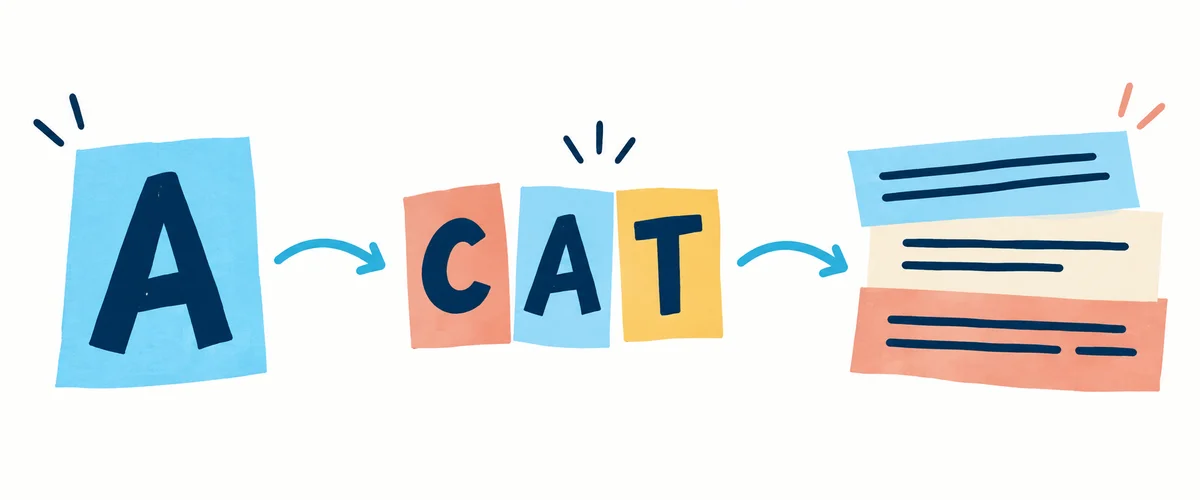
01 / THE BASICS
How the building
blocks connect.
You arrange letters to make a word. Picture amino acids as the letters in a peptide chain.
A peptide contains a short chain of amino acids. These same building blocks make up proteins.
Scientists call the connection between two amino acids a peptide bond. They call the order of the amino acids the sequence. [1]
From building block to bigger structure
Three useful termsAmino acid
One building block, like a letter.
Peptide
A short chain of building blocks, like letters in a word.
Protein
One or more amino-acid chains folded into a three-dimensional shape.
WHAT DO THEY DO?
Some peptides carry a message.
Your body uses some peptides to send signals between cells. These signals help cells coordinate their activity. [7]
A familiar example: insulin
Your pancreas makes insulin, a hormone that helps your cells take in sugar from the blood for energy. [8]
UNDERSTANDING SEQUENCE
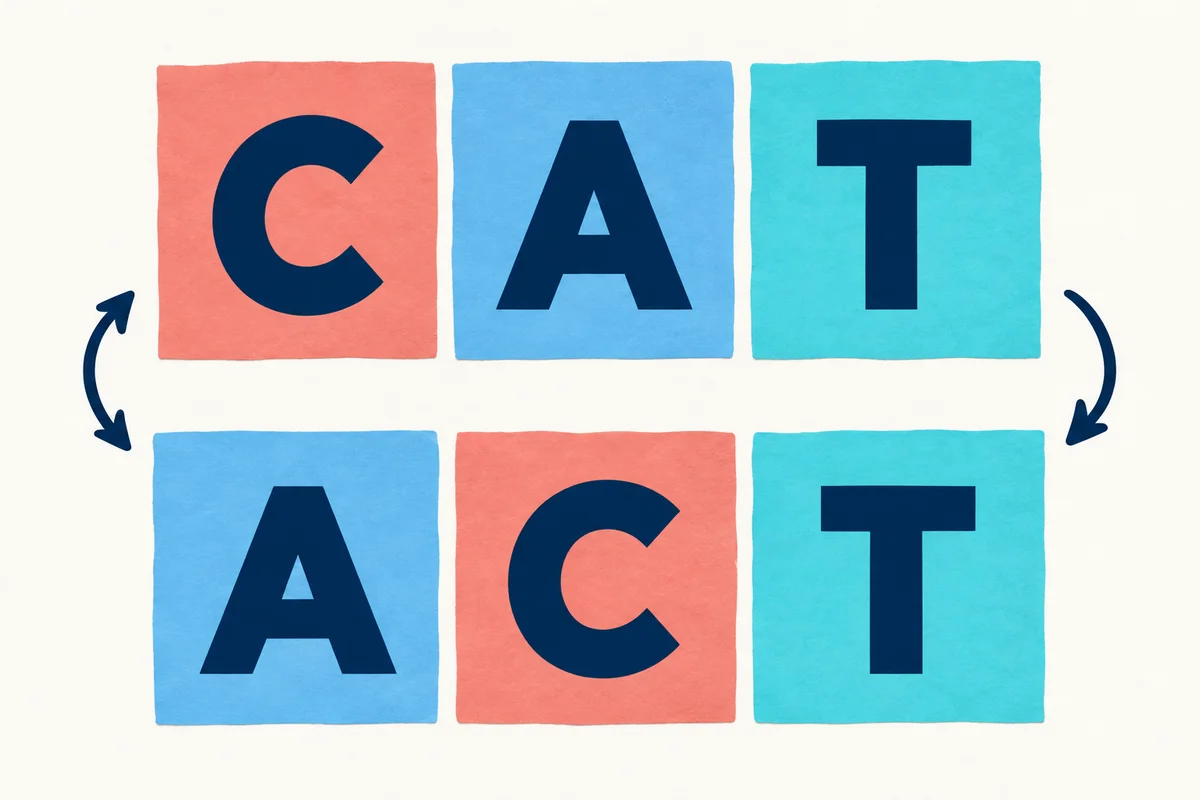
The order matters.
You can rearrange CAT to spell ACT using the same letters.
Researchers read a peptide’s sequence in order, from one amino acid to the next. Recording that order helps them identify the chain. [2]
Were peptides invented?
Peptides occur in nature. Scientists learned to identify them, study their structures and make them in a lab. Many researchers contributed to these discoveries. [2]
02 / THE DISCOVERIES
A century of
peptide research.
Researchers learned how amino acids connect, how to read their order and how to make chains in a lab.
- Early
1900sUnderstanding how the chain connects
Emil Fischer helped establish that proteins contain linked amino acids. Researchers used his work to understand peptide chains. [2]
Scientists worked out how the building blocks connect.
- 1921–22
The discovery of insulin
At the University of Toronto, Frederick Banting, Charles Best, J.J.R. Macleod and James Collip contributed to the discovery and early development of insulin. Their work became a landmark in hormone research and diabetes treatment. [3]
The Toronto team helped turn insulin research into diabetes treatment.
- 1953–55
Reading and building chains
Vincent du Vigneaud’s team synthesized oxytocin in 1953. In 1955, Frederick Sanger completed the amino-acid sequence of insulin. Scientists were learning both to read these molecules and to construct them. [4] [2]
Researchers could identify a chain’s building blocks in order and assemble them in a lab.
- 1963
A more practical way to make peptides
Bruce Merrifield introduced solid-phase peptide synthesis. Researchers attached a growing chain to a solid support, added amino acids in steps and washed away excess chemicals. [5]
Holding the chain in place helped researchers add the next building block.
- 1982
Producing insulin with biotechnology
The FDA approved Humulin, the first approved medical product made using recombinant DNA technology. Scientists used engineered microorganisms to produce human insulin. [6]
Scientists gave microorganisms the instructions to make insulin.
PUBLIC INTEREST
Why are people hearing
so much about peptides?
GLP-1 medicines introduced a wider audience to a field with more than a century of research.
03 / THE RESEARCH
How researchers
study peptides.
Researchers study a peptide’s structure and what it does under specific conditions.
They identify the amino acids, record their order and test the peptide’s activity. They repeat experiments to check their results. [2] [5]
Read the study behind a discovery to see what the researchers tested and found.
What does “synthetic peptide” mean?
Researchers make a synthetic peptide by joining amino acids in a chosen order. They call this process chemical synthesis. [5]
KEEP LEARNING
What does a
lab report tell you?
A lab records a sample’s test results in a certificate of analysis, or COA. Use our guide to read the report and match it to a batch.
Understand a COA Explore the Quality Archive →- Identity
- What was identified?
- Method
- How was it tested?
- Result
- What was measured?
- Batch
- Which record matches?
Read the test results in the original laboratory report.
Follow the sources
Explore the scientific references and historical records below.
- National Human Genome Research Institute: Peptide · Amino acids
- Nobel Prize: The development of modern chemistry
- University of Toronto: The discovery and early development of insulin
- National Academy of Sciences: Vincent du Vigneaud, biographical memoir
- Rockefeller University: Merrifield’s 1963 peptide-synthesis breakthrough
- FDA: 100 years of insulin
- FDA: Peptide definitions and signaling roles
- NIDDK: What is diabetes? The role of insulin
- WADA: 2011 Prohibited List, peptide hormones and growth factors
- FDA: Wegovy approval, June 2021
- KFF: May 2024 public awareness survey
Prepared by Pep Select · Educational overview · Sources checked September 9, 2026